FIFA World Cup 2026 Final: Spain Suffocates Argentina in Historic Extra-Time Victory to Claim Title
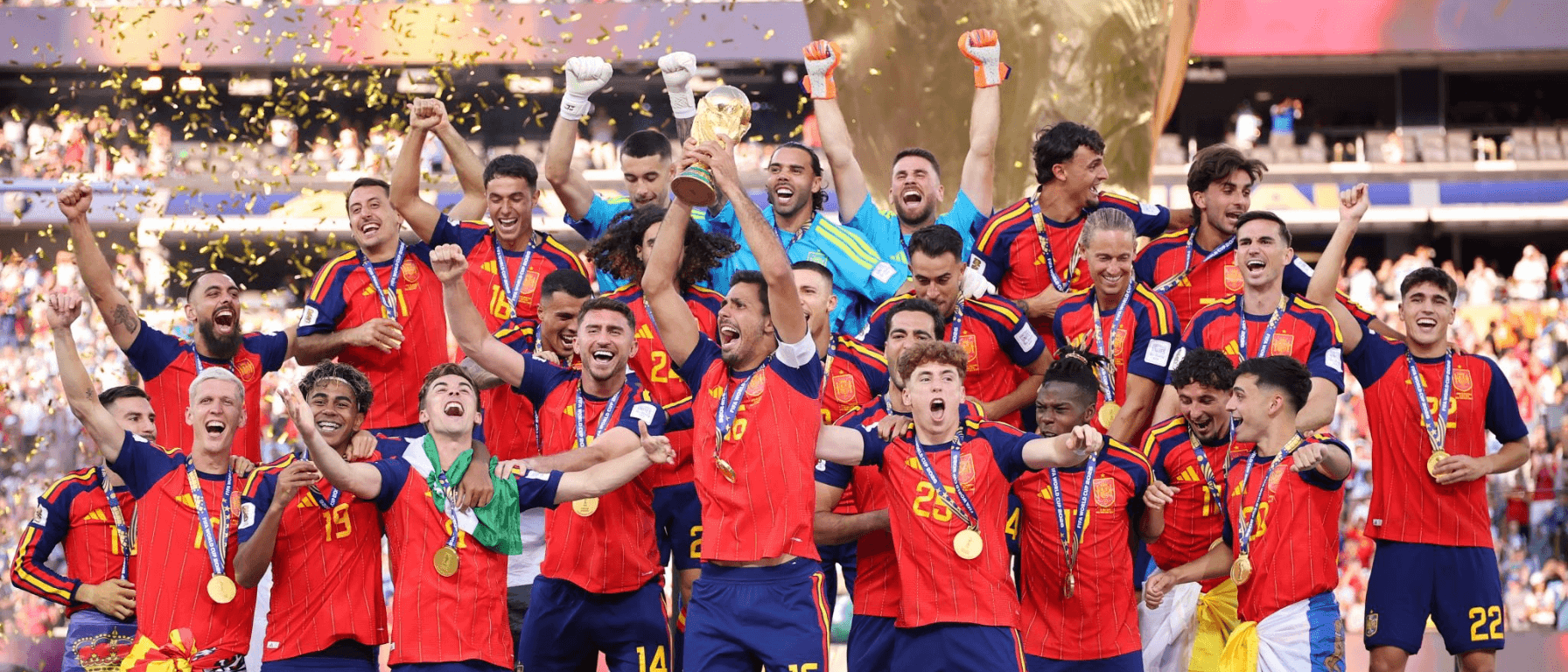
Spain secured the FIFA World Cup 2026™ crown following a clinical 1-0 extra-time victory over Argentina at the New York New Jersey Stadium. A 106th-minute strike from substitute Ferran Torres settled the scoreline, capping off an encounter defined by an unprecedented level of tactical, possession-based, and territorial dominance by the European champions.
Tactical Formations and Complete Monopolization
Spain lined up in a fluid 4-1-2-3 formation under manager Luis de la Fuente, prioritizing absolute control of the tempo through a midfield anchored by Rodri, flanked by Fabián Ruiz and Álex Baena. Argentina countered with a rigid 4-4-2 shape designed by Lionel Scaloni to compress spatial gaps, fielding a frontline led by Lionel Messi and Julián Alvarez.
From the opening whistle, Spain implemented a flawless possession strategy that systematically neutralized Argentina's attacking transitions. Spain controlled 67.3% of the total possession, leaving Argentina with just 32.7%—marking La Albiceleste's lowest recorded share of the ball in a World Cup match since detailed records began in 1966. The Spanish midfield recycled play continuously, ensuring that Messi and Alvarez remained completely isolated. Argentina spent the vast majority of the 120 minutes pinned deep within their own half, to the extent that goalkeeper Emiliano Martínez finished the match with the most individual touches for his team.
Defensive Penalties and Disciplinary Disruption
The first half remained scoreless, characterized by intense defensive organization and high-pressing phases. However, Argentina suffered an early defensive setback in the 43rd minute when central defender Lisandro Martínez was forced off due to an injury, replaced by Nicolás Otamendi.
The tactical deadlock persisted well into the second half, prompting structural alterations from both managers. Spain introduced Ferran Torres and Pedri in the 61st minute to inject verticality, while Argentina countered by deploying Nahuel Molina, Facundo Medina, and Giuliano Simeone to preserve their defensive stability.
As the match approached the end of regular time, Spain's persistent pressure led to a significant escalation in disciplinary actions against Argentina's defensive unit.
Argentina Disciplinary Summary (Second Half)
- 81st Minute: Enzo Fernández (Yellow Card)
- 90+1 Minute: Cristian Romero (Yellow Card)
- 90+2 Minute: Enzo Fernández (Second Yellow / Red Card)
The dismissal of Enzo Fernández in the second minute of second-half stoppage time left Argentina a man down heading into the 30-minute extra-time period.
The Shotless Drought: Historical Offensive Starvation
Spain's structural press entirely starved Argentina of offensive opportunities, producing an extraordinary statistical anomaly in World Cup Final history.
Match Shooting Statistics Overview
- Total Shots Attempted: Spain 20 | Argentina 1
- Shots on Target: Spain 12 | Argentina 0
- Shots in Regular Time (90 Mins): Spain 15 | Argentina 0
According to official metrics dating back to 1966, Argentina became only the third team in World Cup history to fail to register a single shot attempt during normal time. This absolute shot drought persisted completely through regular time and the entire first period of extra time. The defending champions failed to record their very first shot attempt of the match until the second half of extra time—beyond the 110th minute mark—as they desperately chased an equalizer with ten men.
Martínez Defiance and the Extra-Time Breakthrough
Argentina managed to force the game into extra time strictly due to a record-breaking performance from goalkeeper Emiliano Martínez. Martínez registered 12 saves throughout the contest—the most ever recorded by a goalkeeper in a FIFA World Cup Final.
Leveraging their numerical advantage, Spain gradually commanded the tempo during extra time. The decisive tactical breakthrough finally materialized 37 seconds into the second period of extra time (106th minute), just after the brief mid-overtime interval.
Pedro Porro delivered an out-swinging cross from the flank, which Nico Williams headed down into the center of the penalty box. Substitute Ferran Torres met the ball cleanly, executing a first-time half-volley into the roof of the net past a stranded Martínez to log Spain’s 20th shot of the match. A quick VAR review confirmed the legitimacy of the play, officially awarding the goal to Spain.
Down to 10 men and chasing a deficit, Argentina's frustration manifested in further cautions, with Alexis Mac Allister receiving a yellow card in the 111th minute. Spain maintained possession successfully through the final minutes of extra time to deny Argentina any clear equalizer, sealing the 1-0 triumph and confirming their status as World Champions.
Post-Match Confrontation and Disciplinary Penalties
Immediately following the final whistle, the on-pitch celebrations descended into a volatile mass confrontation between players, substitutes, and technical staff from both benches.
The alteration initiated when Argentina defender Nahuel Molina appeared to strike an arm toward a sprinting Spanish player during the initial celebrations. The confrontation escalated severely when Argentina midfielder Leandro Paredes aggressively rushed Spain defender Eric García, grabbing him by the throat and forcing him to the ground.
Spain midfielder Gavi intervened to separate the players and defuse the altercation. Paredes dynamically swung his arm, striking Gavi in the face while Argentina's Thiago Almada attempted to suppress the ongoing physical exchange. Order was eventually restored after Argentina manager Lionel Scaloni intervened to forcefully extract his squad from the melee. Following a programmatic review of the post-match violence by match officials, Leandro Paredes was assessed a straight red card for violent conduct.